

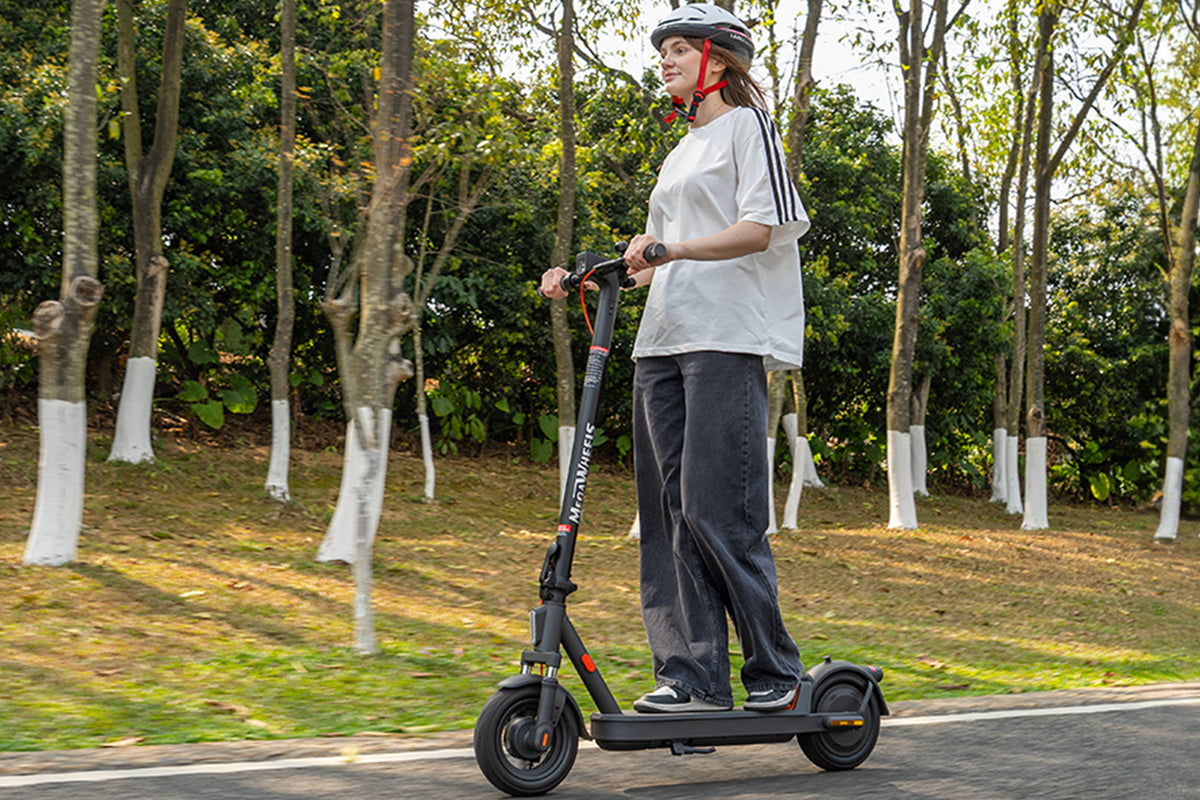
Electric scooters have become one of the most practical, eco-friendly, and cost-effective mobility solutions for modern Americans. Whether for daily urban commutes, short neighborhood trips, or casual weekend rides, a high-quality electric scooter saves time, cuts gas expenses, and reduces carbon footprints. However, shopping for an electric scooter online can be overwhelming for beginners. With countless models, conflicting parameter labels, and varying compliance standards across U.S. states, many buyers end up with mismatched, low-performance, or even illegal scooters.
This comprehensive 2026 buying guide breaks down all the professional, data-backed factors to help you select a perfect electric scooter that fits your lifestyle, local traffic rules, and budget. Written specifically for U.S. consumers, it covers core performance specs, safety standards, portability, and legal compliance, ensuring you make a risk-free and worthwhile online purchase.
1. Prioritize U.S. Local Legal Compliance First
Before checking any performance features, legal compliance is the non-negotiable baseline for buying an electric scooter in the United States. Traffic regulations vary drastically across states and cities, and non-compliant scooters may face fines, impoundment, or prohibition from road use.
According to U.S. municipal traffic standards, most states legally allow electric scooters with a maximum speed of 20 mph and standard safety configurations for road and bike lane use. Scooters exceeding 20 mph top speed or 750W motor power require official registration and a valid driver's license in states like Texas, Florida, and California. For urban areas such as New York City and Chicago, sidewalk riding is strictly banned, and only certified street-legal scooters with complete safety accessories are permitted on bike lanes.
A fully street-legal electric scooter for U.S. daily use must include front and rear LED lights, high-visibility reflectors, a functional horn/bell, and reliable braking systems. Avoid uncertified no-brand models online, as they often lack these mandatory features and fail local safety inspections.
2. Match Motor Power to Your Riding Terrain
Motor power, measured in watts (W), directly determines a scooter's acceleration, load capacity, and hill-climbing performance - the core of daily riding experience. You can select parameters strictly based on your local terrain:
For flat urban roads (most suburban and downtown U.S. areas), 250W to 500W motors are ideal. This power range delivers a stable top speed of 15–20 mph, fully meeting daily commute needs while maintaining low energy consumption and long service life. It suits lightweight riders and short-distance travel within 10 miles.
For hilly regions, coastal slope areas, or riders with a weight over 220 lbs, choose 500W to 1000W high-power motors. Professional test data shows that a 500W motor can steadily climb 10–15° slopes, while an 800W–1000W motor easily handles 20° steep hills, ensuring no power attenuation during uphill acceleration. High-power models also offer more stable speed output with heavy loads, avoiding sluggish performance.
Note: Distinguish nominal power from peak power in product descriptions. Nominal power represents continuous stable performance, while peak power only supports short bursts. Always refer to nominal power for accurate performance judgment.
3. Calculate Real-World Battery Range for Daily Use
Battery range is the most concerned spec for online buyers, yet most merchants label ideal laboratory range, which differs greatly from real road performance.
Most standard adult electric scooters are equipped with lithium-ion batteries from certified brands like LG, Samsung, and Panasonic, with stable energy density and longer cycle life. For U.S. daily commuters, a minimum real range of 15–20 miles per charge is essential to cover round-trip work trips without frequent recharging. For long-distance travel over 25 miles daily, opt for high-capacity models with a 30+ mile real range.
Multiple industry tests verify that real-world range is 15–25% lower than official advertised data, affected by rider weight, road roughness, wind speed, and low temperature. Additionally, removable battery designs are highly recommended for U.S. users. They allow flexible indoor charging, solving the problem of no charging access in apartment buildings or office parking lots.
4. Verify Safety Configurations for Long-Term Use
Safety is paramount for personal mobility tools, and professional safety configurations determine riding stability and emergency response capability.
First, the braking system. Dual braking systems (front electronic brake + rear disc brake) are the mainstream safe configuration for premium scooters. Hydraulic disc brakes provide 30% stronger stopping power than ordinary mechanical brakes, especially effective on wet and slippery roads, reducing braking distance to less than 3 meters at 15 mph.
Second, tire and suspension settings. For urban paved roads, 8–10 inch pneumatic tires offer excellent shock absorption and grip. For uneven roads with potholes or gravel, fat tires with dual spring suspension systems effectively reduce vibration and improve riding comfort and stability.
Third, load capacity. Most standard adult scooters support a maximum load of 220–300 lbs. Exceeding the load limit will cause reduced speed, shortened battery life, and accelerated frame wear. Always match the load capacity to your body weight before purchasing.
5. Balance Portability and Practicality
Portability is a key advantage of electric scooters, especially for users who need to carry devices into subways, offices, or homes.
Foldable designs are essential for daily urban use. Qualified lightweight commuter scooters weigh 26–35 lbs, easy to fold and carry with one hand, and fit in car trunks or storage corners. Heavy-duty high-performance models (over 40 lbs) are not suitable for frequent carrying but excel in stability and durability for long-distance and rough-terrain riding.
Besides weight, check the folded size and waterproof IP rating. An IPX4 or higher waterproof rating ensures safe use in light rain, adapting to changeable U.S. weather and avoiding circuit damage from splashing water.
6. Choose Reliable After-Sales and Certified Products
Online shopping lacks offline experience, making after-sales service and product certification critical. Prioritize scooters with U.S. local certifications (UL, FCC) to ensure electrical safety and market compliance, avoiding unqualified products with hidden circuit risks.
Reputable brands provide 12-month warranty services for motors, batteries, and controllers, plus accessible U.S. local after-sales support. Avoid cheap no-name scooters with vague parameter descriptions and no after-sales guarantees. Although they have low upfront costs, they are prone to battery swelling, motor failure, and brake malfunction, leading to higher long-term replacement and maintenance costs.
Final Verdict
Selecting a perfect electric scooter does not mean chasing the highest parameters, but finding the most matched model for your personal needs. For most American urban commuters, a 350W–500W motor, 20-mile real range, dual braking safety system, and foldable lightweight design is the most cost-effective choice. For hilly areas or long-distance travel, upgrade to a 500W+ high-power model with longer battery life.
Always prioritize U.S. legal compliance, real practical performance, and formal after-sales service over exaggerated marketing slogans. With these data-backed standards, you can easily filter out high-quality electric scooters and enjoy convenient, safe, and eco-friendly smart travel every day.

Leave a comment
All comments are moderated before being published.
This site is protected by hCaptcha and the hCaptcha Privacy Policy and Terms of Service apply.