

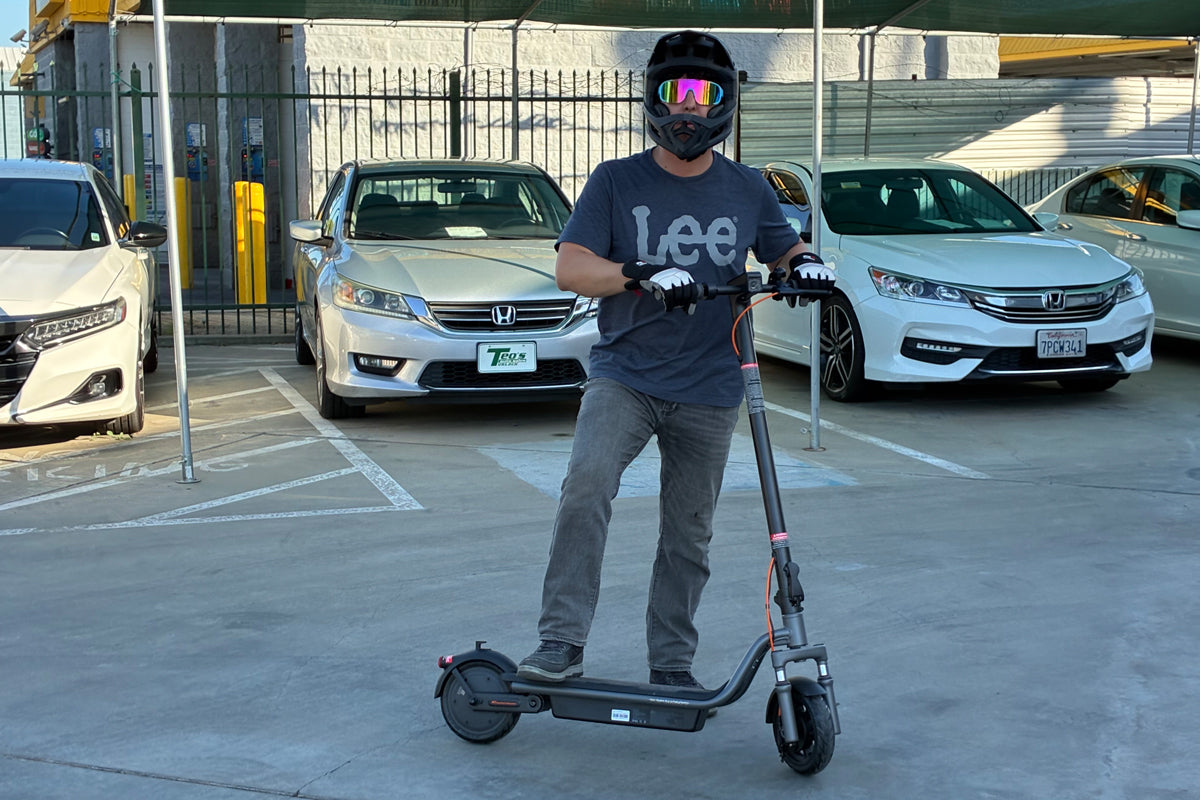
If you've ever stood on a street corner watching someone glide past on an electric scooter, you've probably asked the same question: “Wait… is that even legal here?”
The short answer is: yes, electric scooters are legal in most of the United States in 2026 - but “legal” doesn't mean “allowed everywhere.” The rules depend on your state, your city, your scooter's speed and power, and even the sidewalk you're standing on.
This guide breaks down how U.S. electric scooter laws actually work, where people get confused, and how to ride responsibly without accidentally breaking a local ordinance.
Why There Isn’t One Simple “Yes” or “No”
In the U.S., there is no single federal law that says, “Electric scooters are allowed on all public roads.” Instead, the rules are built in three layers:
1. Federal level – Mostly about product safety, batteries, and whether a device counts as a “motor vehicle.”
2. State level – Defines what an electric scooter is, sets speed/power limits, age rules, and where scooters may operate.
3. Local level – Cities and counties decide sidewalk access, parking, slow zones, rental programs, and business-district restrictions.
That’s why a ride that’s fine in one neighborhood can be a citation in the next town over.
How States Define an Electric Scooter
Most states that have passed scooter laws use a similar baseline for a “low-speed electric scooter”:
· Stand-up device with handlebars
· Electric motor (often discussed around 750W or less)
· Top speed commonly capped at 15–20 mph
· No full motorcycle-style seating
Stay inside that definition and your electric scooter is usually treated more like a bicycle than a motorcycle. Go beyond it - higher wattage, higher top speed, a seat, or moped-like design - and the device may be reclassified as a moped, motor-driven cycle, or motorcycle. That triggers licensing, registration, insurance, and endorsement requirements.
So the real question isn’t just “Is an electric scooter legal?”
It’s: “Is this electric scooter legal here?”
Where You Can Ride an Electric Scooter in 2026
1. Bike Lanes = The Safe Default
In most places that allow scooters, bike lanes and multi-use paths are the preferred riding space. They keep riders off busy car lanes and off crowded sidewalks.
Many cities require riders to use a bike lane when one is available.
2. Roads and Streets
Electric scooters are often allowed on public roads, especially when:
· There’s no bike lane
· The road has a lower posted speed limit
· Local law permits micromobility devices
Common thresholds are roads posted at 25, 30, or 35 mph, depending on the state. On faster roads, scooters are frequently restricted or required to stay in a bike lane.
Riders are generally expected to:
· Ride with traffic
· Obey signals and signs
· Use hand signals when turning
· Stay as far right as safely practical
3. Sidewalks = The Biggest Gray Area
Sidewalk riding is where riders get tripped up—literally and legally.
Some states ban it outright. Others leave it to local governments. Many major cities prohibit scooters on sidewalks in downtown or business districts because a 15–20 mph device doesn’t mix well with pedestrians.
As a rule of thumb:
If you’re not sure, default to the bike lane or road. Sidewalk riding should only happen where local signage or ordinance clearly allows it.
License, Registration, and Insurance
For most low-speed personal electric scooters, the answer is refreshingly simple:
· License: Often not required, but some states require a driver’s license or learner’s permit.
· Registration: Usually not required for low-speed scooters.
· Insurance: Typically not required for personal low-speed devices.
But “not required” is not the same as “no rules.” California, for example, allows electric scooters but requires a Class C license or permit, a helmet for younger riders, and a 15 mph limit. New York allows them on many streets and bike lanes but restricts sidewalk use and caps speed in key areas.
If your scooter is powerful enough to be classified as a moped or motorcycle, the rules change completely.
Age and Helmet Rules
Age limits are all over the map:
· Some states set the minimum at 16
· Others allow riders at 14 or 15
· A few set it higher, at 18
· Some have no clear statewide minimum, leaving it to cities
Helmet laws follow a similar patchwork. Many states require helmets for riders under 16 or 18. A few require helmets for everyone. Even when the law doesn’t require a helmet for adults, it’s one of the easiest safety decisions you can make.
If you're buying an electric scooter for a teenager, don't just check the product page - check the city's rules.
Examples of How Different States Handle It
Rules shift by state, but the pattern is consistent: micromobility is legal, but conditioned.
- California: Electric scooters are legal, capped at 15 mph, license/permit required, helmets for younger riders, sidewalk riding generally restricted.
- New York: Allowed on many streets and bike lanes, often limited to 15 mph in NYC, sidewalk riding generally prohibited.
- Florida: Scooter and micromobility riders often share bicycle rights and duties; no license/registration required statewide, but cities can add restrictions.
- Texas: State law allows scooters in many contexts, but cities decide sidewalk access and local operating rules.
- Washington: Scooters are generally treated in the micromobility/bike family, with local rules controlling sidewalks and speed.
- Pennsylvania / Delaware: Historically restrictive or unclear, with ongoing legislative changes - always verify the current state statute before riding.
The point isn’t to memorize every state. The point is to expect variation.
The Most Common Electric Scooter Mistakes
Here are the issues riders run into most often:
❌ Assuming “It’s Sold in the US” Means “It’s Legal to Ride Anywhere”
Retail legality ≠ road legality. A scooter can be sold nationally but still break local speed or sidewalk rules.
❌ Riding on the Sidewalk by Default
It feels safer, but in many cities it’s the fastest way to get a ticket—and the bigger safety risk for pedestrians.
❌ Buying a 30–40+ MPH Scooter for City Commuting
High-performance scooters are fun, but many exceed the low-speed definitions states use. On public streets, that can mean moped/motorcycle rules—or no clear legal path at all.
❌ Ignoring Local Parking Rules
Cities care a lot about scooters blocking ramps, doorways, and crosswalks. Bad parking fuels local bans.
❌ Modifying the Speed Limiter
Removing or bypassing the limiter can reclassify the device and create real legal exposure if you crash or get stopped.
How to Know If Your Electric Scooter Is Legal on Your Route
Before your first ride, run through this checklist:
1. Check your state statute for “electric scooter,” “motorized scooter,” or “micromobility device.”
2. Check your city/county municipal code for sidewalk, bike lane, and road rules.
3. Look for posted signs in downtowns, parks, campuses, and waterfronts.
4. Confirm your scooter’s specs: top speed, motor wattage, seat or no seat.
5. Know the rider rules: age, license, helmet, lighting, passengers.
6. Plan a route that uses bike lanes and low-speed streets.
If a rental app geofences you into a slow zone, that’s not a glitch—it’s local policy in action.
A Smarter Way to Think About “Legal”
Instead of asking “Can I get away with this?”, ask:
“Am I riding a device that fits my city’s definition, on infrastructure built for it, in a way that keeps pedestrians and cyclists safe?”
That mindset keeps you out of trouble and makes cities more scooter-friendly overall.
When riders blow through crosswalks or clog sidewalks, councils respond with bans. When riders follow bike-lane etiquette, signal turns, yield to pedestrians, and park responsibly, electric scooters become part of the transportation system instead of a nuisance.
Quick FAQ: Electric Scooters in the U.S. (2026)
Are electric scooters legal in the United States?
Yes—in most states and cities, low-speed electric scooters are legal. But each location sets its own limits for speed, age, helmets, sidewalks, and roads.
Do I need a license for an electric scooter?
Often no, for low-speed models. Some states require a driver’s license or learner’s permit. Faster or seated devices may require a moped/motorcycle license.
Can I ride an electric scooter on the sidewalk?
Sometimes—but not usually in busy urban areas. Bike lanes are safer and legal in far more places.
Do electric scooters need registration or insurance?
Most low-speed personal scooters don’t. If the device is classified as a moped or motorcycle, it probably does.
What speed is “legal”?
Commonly 15–20 mph for public use. Local areas may set lower limits near schools, parks, or business districts.
Final Thought
The 2026 answer to “Are electric scooters legal in the United States?” is yes—but with an asterisk the size of a bike lane.
An electric scooter is one of the most practical last-mile tools around. It beats traffic, cuts parking stress, and makes short trips feel effortless. But the freedom only works when riders treat scooters like real vehicles: predictable, courteous, and rule-aware.
Learn the state baseline. Read the city rules. Ride like a neighbor, not a loophole. That’s how you keep electric scooters legal—for yourself and for everyone coming up behind you.


Leave a comment
All comments are moderated before being published.
This site is protected by hCaptcha and the hCaptcha Privacy Policy and Terms of Service apply.