

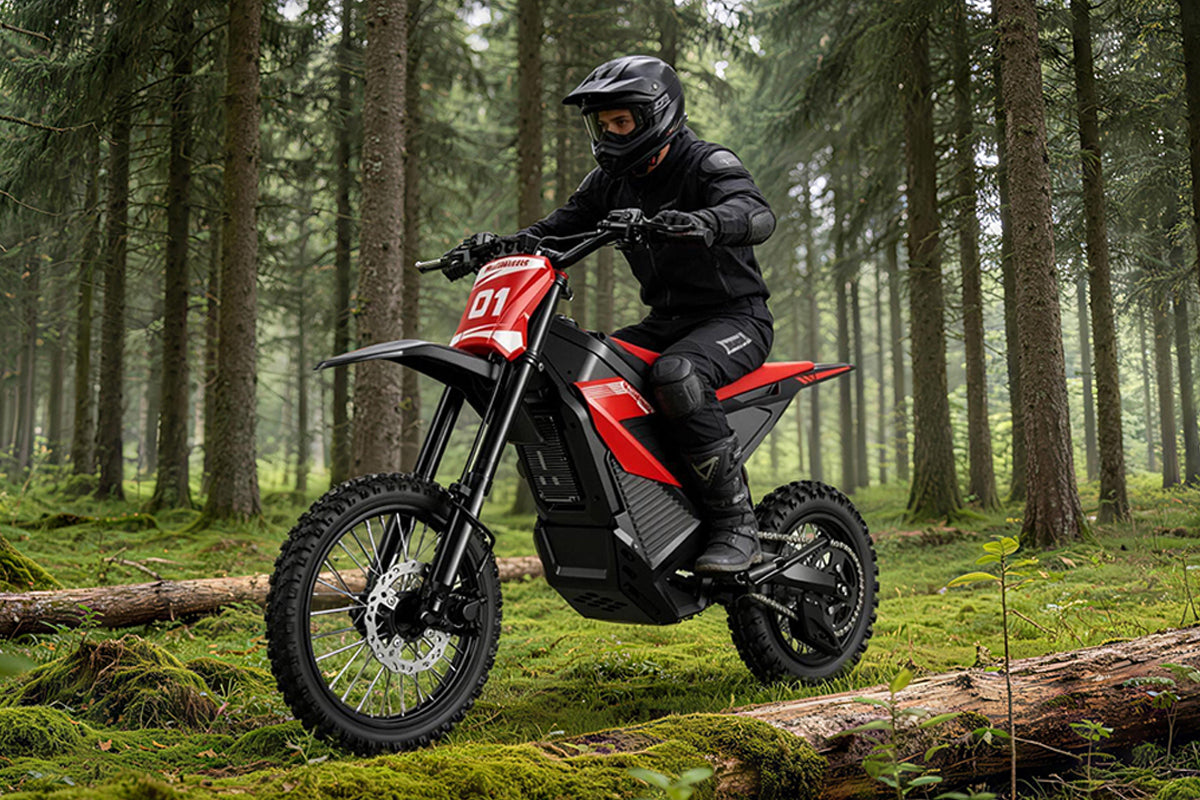
How to Buy an Electric Dirt Bike for Your Teen: A Beginner's Guide

Most parents shopping for a teen's first electric dirt bike fixate on top speed. That's the wrong place to start. The bikes that actually get ridden every weekend aren't the fastest; they're the ones that fit the rider, the budget, and the terrain.
Here's what we'll cover:
● How to match the bike to your teen's age, height, and skill level
● The specs that matter (and the ones that are pure marketing fluff)
● What each price tier actually gets you
● How to vet the brand before you spend a dollar
● Where your teen can legally and safely ride once it arrives
MEGAWHEELS built the D2 series electric dirt bikes around this exact growth curve, with three tiers covering riders ages 8 to 18. You'll see them referenced throughout this guide as natural fits for different stages.
Match the bike to your rider
Three factors decide whether a bike fits: age, height, and skill level. Get one wrong, and the bike either gathers dust in the garage or becomes a hazard. The good news is that the fit test is simple.
The flat-foot test
Have your teen sit on the bike in riding shoes. Both feet should plant flat or near-flat on the ground at a stop. If they're on tiptoes, the bike is too tall. If their knees fold sharply, it's too small.
Quick reference by rider profile
|
Rider profile |
Recommended tier |
Why it fits |
|
Ages 8 to 12, beginner, under 5'2" |
Entry-level |
Lower seat, manageable power, easier to balance |
|
Ages 12 to 15, some experience, 5'2" to 5'7" |
Mid-tier |
More torque for hills, room to grow into the speed |
|
Ages 14 to 18, confident rider, 5'5" and up |
Top-tier |
Full power, higher top speed, and real off-road performance |
The D2 Lite, D2, and D2 Pro line up against these three tiers, which is why the series targets ages 8 to 18 as a single growth path.
Skill beats age every time
A cautious 15-year-old new to off-road riding is still a beginner. A confident 12-year-old who's spent two summers on a smaller bike isn't. Buy for the current skill level, not the birthday on the calendar.
For a deeper breakdown, see our guide on what age a kid can ride an electric dirt bike.
Pro tip: Plan for 18 to 24 months of growth, not 6. Teens shoot up in height, but skill takes longer to build. A bike with adjustable speed modes lets you cap the top end early and unlock it as confidence grows.
Specs that actually matter
Brands love to plaster huge peak wattage numbers on the listing. That's the spec sheet equivalent of a bench-press one-rep max. It tells you what the bike can do for two seconds, not what it can do for two hours.
Here's what to actually look at:
|
Spec |
Why it matters |
What to ignore |
|
Continuous wattage |
Sustained power the motor delivers without overheating |
Peak watts with no continuous rating listed |
|
Torque (Nm) |
Acceleration, hill-climbing, low-speed control. The most useful number for off-road |
"Horsepower equivalent" hype |
|
Battery voltage and Ah |
Real range and how well power holds up under load |
"Long-range" claims with no Ah figure |
|
Brake type |
Hydraulic disc brakes stop short with less hand force. Mechanical brakes fade fast |
Vague terms like "premium" with no brake type listed |
|
Adjustable speed modes |
Lets you cap top speed for learning and unlock it as skill grows |
One-speed bikes sold as "beginner-friendly" |
For context, torque under 150 Nm struggles on real hills. The 180 to 226 Nm range across the D2 series sits squarely in the zone that competent off-road bikes occupy. Top speed is the easiest spec to overweight. A 50 mph bike isn't better than a 38 mph bike for a 10-year-old. It's just faster, and faster isn't safer.
Pro tip: If a listing buries the continuous wattage and only screams peak watts, treat that as a yellow flag. Honest brands publish both.
What each price tier delivers

Electric dirt bikes for teens span from disposable toys to race-tier machines. Here's what each band actually gets in your rider:
|
Price tier |
What you get |
Who it fits |
|
Under $500 |
Toy-grade hub motors, no real suspension, often no warranty |
Skip. Won't survive a season |
|
$500 to $1,000 |
Real motors (2000W to 3000W), basic suspension, entry-level specs |
Beginners ages 8 to 12 |
|
$1,000 to $1,500 |
Stronger torque (200+ Nm), better brakes, more battery |
Riders with a season under their belt |
|
$1,500 to $2,000+ |
Full off-road performance, 5000W and up, full hydraulic suspension |
Confident teens ready for real trails |
|
Above $3,000 |
Adult and race-tier machines (Sur-Ron, Talaria, Stark VARG) |
Overkill for teens, full stop |
The D2 Lite at $999, D2 at $1,199, and D2 Pro at $1,999 each anchor one of the three usable tiers, which is why families tend to upgrade within the same series instead of jumping brands.
One trap to watch for: the $300 to $500 listings on marketplace apps. They look like deals until the chain snaps in week three, and there's no one to call. A budget bike from a real brand beats a deal from a no-name every time.
Pro tip: Budget for safety gear separately. A helmet, gloves, boots, and pads will run $200 to $400. Riding without them defeats the point of buying a quality bike in the first place.
Vet the brand before you buy
The bike matters less than the company standing behind it. A solid spec sheet means nothing if the controller dies in month four and no one answers the phone.
Run through this checklist before you hit checkout:
● Warranty length and coverage. A 12-month warranty covering the motor, battery, and controller is the floor. Less than that, walk away. Read the warranty terms closely
● US-based customer support. Look for a US phone number or business hours in PST or EST. Email-only support that takes 72 hours is a red flag
● Parts availability. A brand that sells replacement parts openly on its site is a brand that expects to be around in two years. No parts page? Assume there aren't any
● Shipping origin and speed. US-based shipping in days, not weeks, from overseas
● Return policy. A 30-day money-back guarantee is standard for legitimate brands
● Real reviews from real owners. Look on YouTube, Reddit, and independent review sites. If every review reads the same way, it's a fake review farm
Red flags in one glance: no warranty listed, generic Gmail support email, prices that look "too good," product photos that don't match across pages, and stock images instead of real customer shots.
Pro tip: Search the brand name plus the words "complaints” or "reviews " before buying. Five minutes of digging beats a $1,500 mistake.
Where teens can legally ride

Electric dirt bikes are not e-bikes. Most lack pedals, exceed 20 mph, and are legally classified as off-highway motor vehicles (OHVs). That changes where they can be ridden.
Legal riding zones
● Private property with permission. The easiest option. No registration required in any state
● Designated OHV parks and trails. State-run parks with off-road tracks. Most require an OHV decal or permit ($10 to $50 per year)
● Motocross tracks. Purpose-built facilities with jumps, berms, and dedicated youth practice times
● Some BLM and national forest trails. Check the Motor Vehicle Use Map (MVUM) for the specific forest before riding
Where to never ride
● Public streets, sidewalks, and bike paths
● City parks and school grounds
● Hiking trails and non-motorized routes
● Anywhere with a posted "no motorized vehicles" sign
State age and supervision rules
Rules vary by state, but the common patterns are:
● California: Riders under 14 need direct adult supervision on public OHV land. Ages 14 to 17 need an ATV Safety Certificate
● Texas: Riders under 14 must be supervised by an adult on public lands
● Florida and most others: Helmets required for minors, OHV decal required for state-managed trails
Always check your state's DMV or Department of Natural Resources site before the first ride. County rules sometimes add requirements on top.
Pro tip: Trespassing complaints are the fastest way to lose riding privileges for a whole neighborhood. Stick to property you own, have permission for, or have paid to access.
Find Your Teen's First Ride With MEGAWHEELS
Buying a teen's first electric dirt bike comes down to fit, honest specs, the right budget tier, and a brand that picks up the phone. Skip the marketing noise and the bargain-bin listings, and you'll end up with a bike that gets ridden every weekend instead of one that gathers dust.
Quick recap:
● Match the bike to your teen's age, height, and skill, not just their birthday
● Prioritize continuous wattage and torque over flashy peak numbers
● Use price tiers as a fit guide, not a bragging right
● Vet the brand's warranty, support, and parts before checkout
● Ride only on private property, OHV parks, or motocross tracks
The MEGAWHEELS D2 series was built around this exact decision framework, with three tiers covering ages 8 to 18, US shipping in 2 to 7 business days, and a 12-month warranty. One series, one growth path, no guesswork.
Frequently asked questions
At what age can a kid ride an electric dirt bike?
Most electric dirt bikes suit riders ages 8 and up. The right fit depends on the rider's height, maturity, and riding experience, not age alone.
How much should I spend on a teen's first electric dirt bike?
Budget $1,000 to $1,500 for a quality entry-level electric dirt bike. Anything under $500 is toy-grade. Above $3,000 is overkill for most teens.
Are electric dirt bikes street legal for teens?
No. Electric dirt bikes are classified as off-highway vehicles in most US states. Ride only on private property, OHV parks, or motocross tracks.
How fast does an entry-level electric dirt bike go?
Entry-level electric dirt bikes for teens typically top out at 35 to 40 mph. Adjustable speed modes let you cap the top speed during learning.
Do you need a license to ride an electric dirt bike?
No license is required for off-road use on private property or OHV parks. Some states require a safety certificate for riders under 18.

Leave a comment
All comments are moderated before being published.
This site is protected by hCaptcha and the hCaptcha Privacy Policy and Terms of Service apply.